
Alyne Wellness offers Personalized Repetitive Transcranial Magnetic Stimulation for Parkinson’s disease treatment. Our advanced PrTMS treatment is tailored to each individual’s brain activity pattern and symptoms to promote better brain function and improved quality of life.
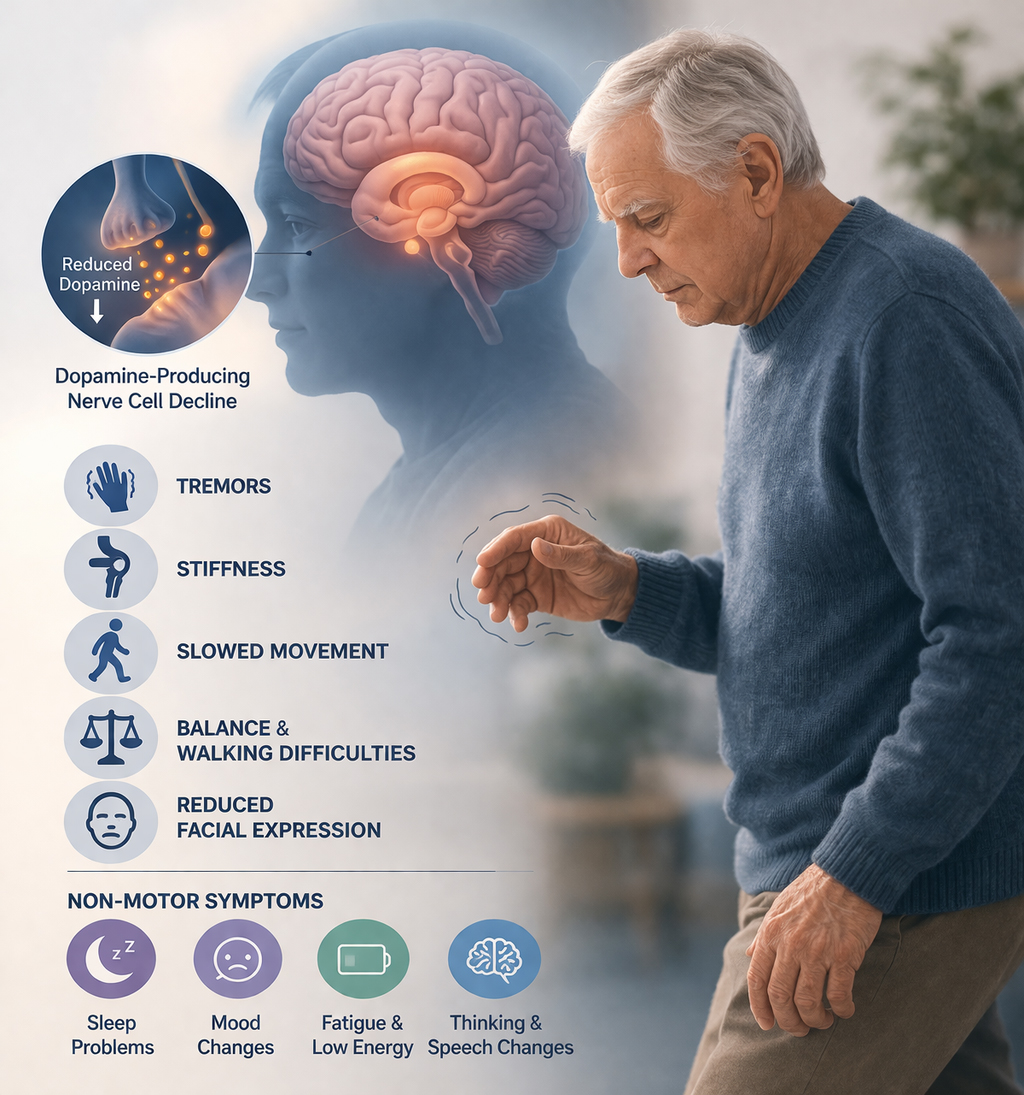
Parkinson’s disease is a progressive neurological disorder that affects movement, coordination, and other non-motor functions.
It commonly develops when dopamine-producing nerve cells in the brain decline, which interferes with brain circuits that control smooth and balanced movement.
Symptoms vary from person to person, but many people experience tremors, stiffness, slowed movement, poor balance, walking difficulties, and reduced facial expression.
Parkinson’s can also affect sleep, mood, energy, thinking, and speech, which is why treatment often needs to address more than just motor symptoms alone.
There isn’t one single known cause of Parkinson’s disease and research suggests it develops from a combination of factors like aging, genetics, and environmental exposure that may damage brain cells over time.
In some people, inherited genetic traits may contribute to risk, while in others, exposure to toxins such as pesticides or industrial chemicals also play a role.
Researchers believe that abnormal protein buildup of Lewy bodies and changes in brain cell communication may contribute to the progression of the disorder.
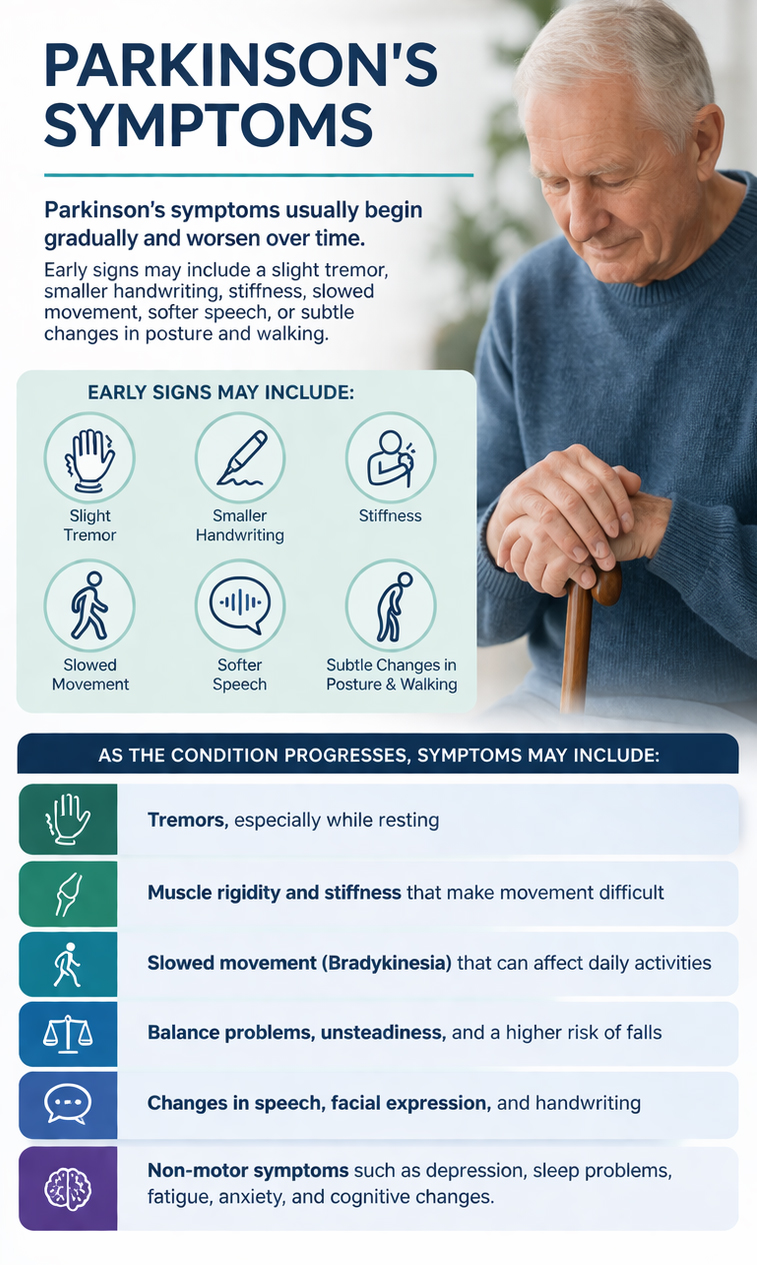
Parkinson’s symptoms usually begin gradually and worsen over time. Early signs may include a slight tremor, smaller handwriting, stiffness, slowed movement, softer speech, or subtle changes in posture and walking.
There is currently no cure for Parkinson’s disease, so traditional treatment is mainly focused on managing symptoms and preserving day-to-day function.
The most common medications are designed to increase dopamine activity in the brain or mimic the effects of dopamine, with levodopa being the most widely used and most effective medicine for many motor symptoms.
Other treatments may include dopamine agonists, MAO-B inhibitors, physical therapy, occupational therapy, speech therapy, exercise, and lifestyle changes.
In advanced cases, some patients may qualify for procedures like Deep Brain Stimulation (DBS), which can help with motor fluctuations but requires surgery.
Although these treatments can be helpful, medications can cause side effects such as nausea, dizziness, hallucinations, insomnia, or involuntary movements.
Surgical approaches can also be effective, but they are more invasive and may not be the right fit for every person.
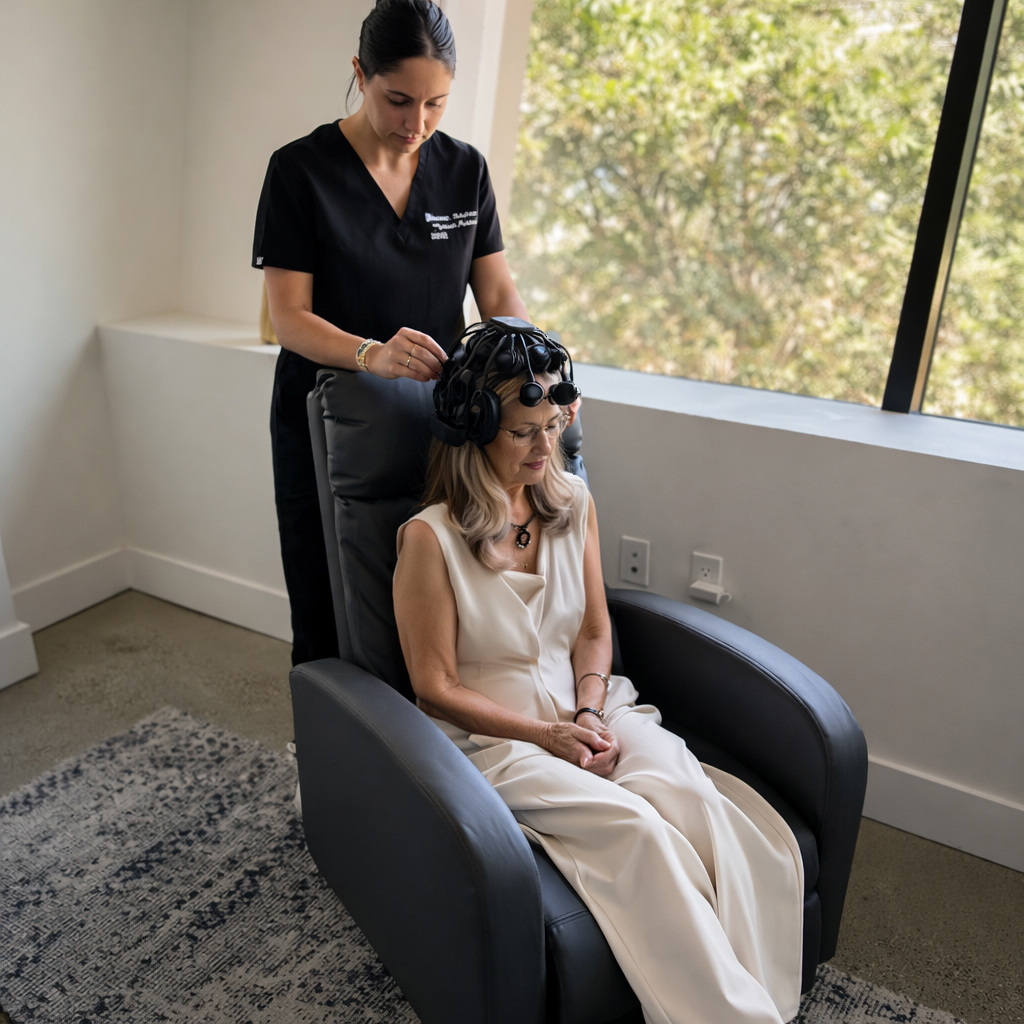
TMS is a non-invasive outpatient therapy that uses magnetic pulses to stimulate targeted areas of the brain involved in movement, mood, and cognitive function.
These pulses are believed to help regulate cortical excitability, strengthen healthy neural signaling, and support balanced communication across the brain circuits involved in movement.
In Parkinson’s disease, this may help improve how motor networks function, which can improve motor symptoms such as slowness, rigidity, gait difficulties, and overall movement in some patients.
Because Parkinson’s can also affect non-motor symptoms like mood, energy, sleep, and thinking, targeted TMS may also offer benefits beyond movement in some patients, especially when used as part of a broader treatment plan.
Unlike surgery, TMS does not require anesthesia, implanted devices, or recovery time.
For Parkinson’s, it works in a similar way as TMS for stroke rehabilitation, dementia, insomnia, and other conditions.
PrTMS Therapy for Parkinson’s at Alyne Wellness may offer several benefits compared to other treatment approaches.
TMS does not involve surgery, implants, or anesthesia, making it appealing for people who want a less invasive option.
Because TMS is not a medication, it avoids many of the side effects associated with Parkinson’s drugs, such as nausea, dizziness, or medication interactions.
Instead of affecting the whole body, TMS focuses only on specific brain regions linked to movement and related symptoms.
TMS sessions are performed in an office setting, and most people can return to normal activities shortly after treatment.
TMS is generally considered an add-on Parkinson’s treatment, which means it can be used alongside medications, therapy, exercise, and other supportive care rather than replacing them.
At Alyne Wellness, PrTMS for Parkinson’s uses an individualized assessment and ongoing treatment adjustments to support a customized care experience.
In addition to movement-related symptoms, TMS may help many patients with mood or other non-motor challenges that affect overall quality of life.
For people who are not ready for or eligible for surgical procedures such as DBS, TMS offers a non-surgical neuromodulation approach worth discussing with a qualified provider.
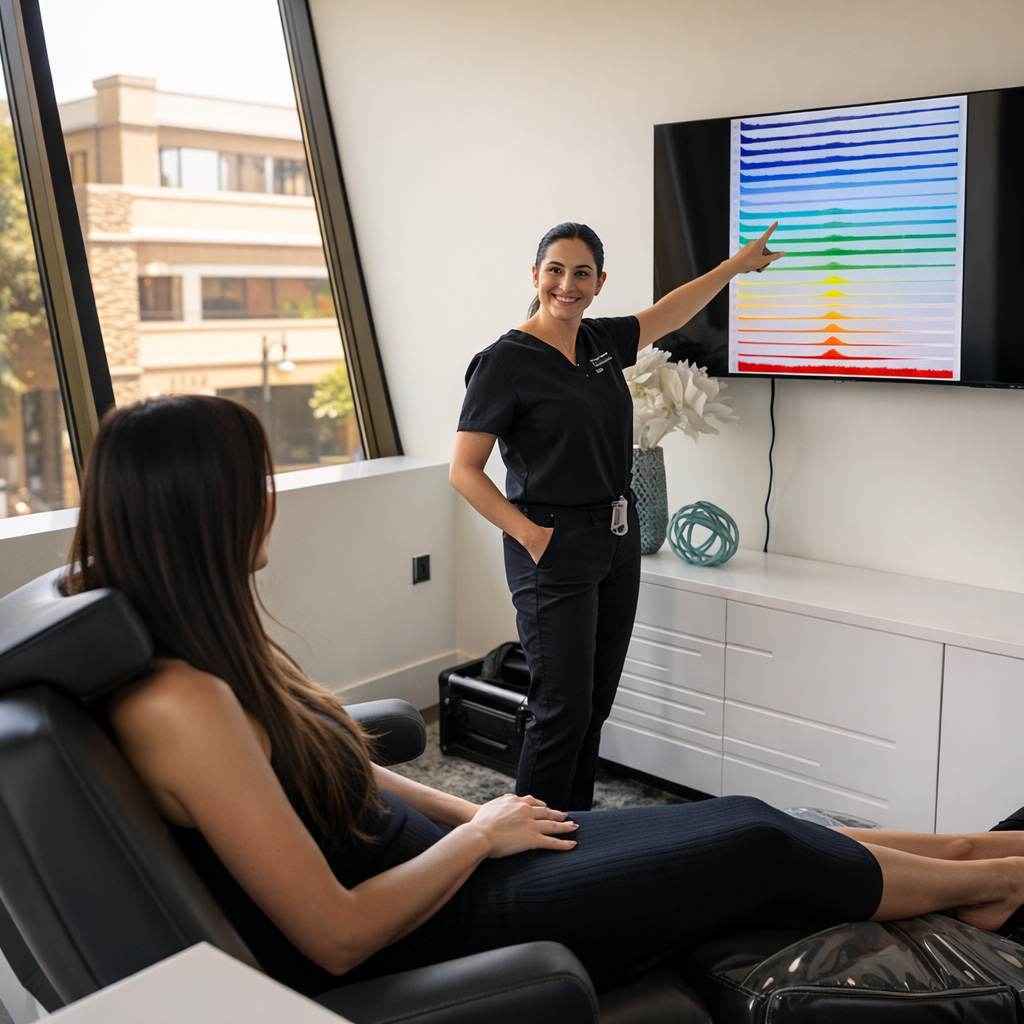
Parkinson’s disease affects each person differently, so treatment should reflect that approach to care.
Alyne Wellness uses a personalized approach to TMS therapy that aims to identify which areas of brain function may need support and then adapt treatment as symptoms and response change over time.
Transcranial Magnetic Stimulation for Parkinson’s is an emerging treatment method that may offer meaningful support for movement, mood, and daily functioning in some individuals.
When combined with a comprehensive care plan, it can be a valuable option for those seeking a non-drug, non-surgical addition to traditional Parkinson’s treatment.
To learn more about Personalized Repetitive TMS for Parkinson’s Disease, contact Alyne Wellness in Agoura Hills, California at (805) 405-3309.